

FAITH & FINANCE
What’s In
Your Hand?
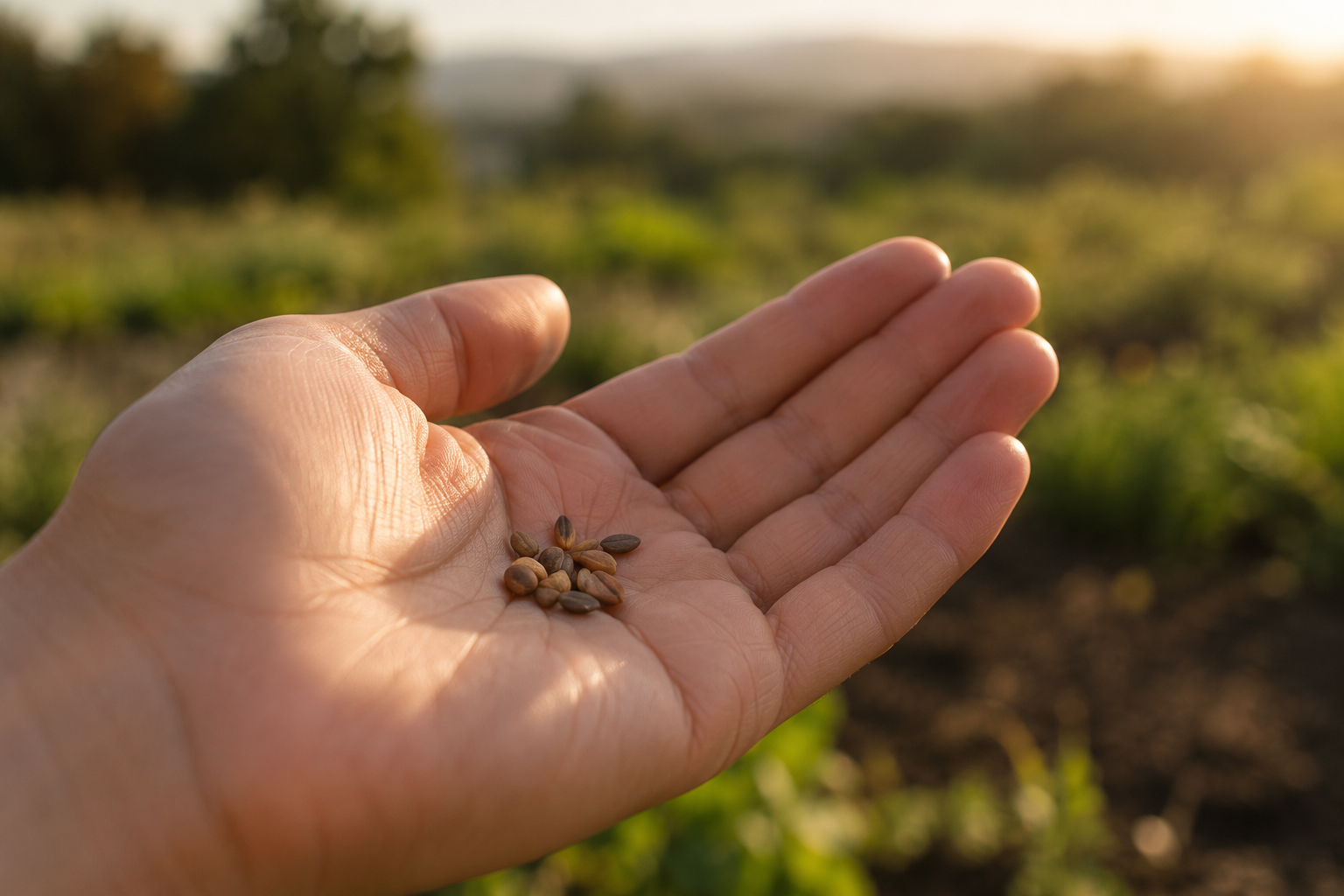
Sometimes the answer begins with what God has already placed in your hands. Sometimes we simply need Him to open our eyes.
Have you ever reached a place where you simply could not see the answer? You have prayed. You have thought about it from every direction. You have looked at what you have and what you need, and the distance between the two seems impossible. Sometimes the problem becomes so large that it is all we can see.
I understand that feeling. There have been moments in my own life when I have looked at circumstances involving my family and wondered what I was going to do. As a mother, there is something particularly painful about facing a problem that affects your children and feeling as though you do not have what you need to fix it.
That is one reason two stories in Scripture touch me so deeply. They are the stories of two mothers, two desperate situations, and two women who could not see a way forward. Yet they are also two reminders that when we cannot see the answer, it does not mean God is absent. Sometimes the provision is already in our hands. Sometimes the provision is already within sight. And sometimes we need God to open our eyes.
WHEN WE CANNOT SEE THE ANSWER, IT DOES NOT MEAN GOD IS ABSENT.
A Mother Who Had Reached a Crisis
In 2 Kings 4, a widow came to the prophet Elisha in desperation. Her husband had died, debts remained, and a creditor was coming to take her two sons into servitude because of what was owed. Imagine being that mother. She had already lost her husband, and now she was facing the possibility of losing her sons. She needed more than encouragement. She needed provision. She needed an answer. She needed a miracle.
Elisha asked her an interesting question: What do you have in your house?
Her response was essentially that she had nothing, except a small amount of oil. I understand why she answered that way. When your problem is enormous, something small can look like nothing. The oil did not look like enough to address the debt. It did not look like enough to protect her sons. It did not look like the answer. But it was there.

Stop Calling It “Just”
How often do we do exactly what this woman did? We say, “I don't really have anything. I just know how to cook.” Or, “I'm just good with children.” Maybe it is, “I've just worked in this industry for twenty years,” “People just come to me when they need advice,” “I just know how to organize,” “I just have this idea,” or “I just have a little money saved.” Pay attention to what comes after your “just.”
Sometimes we minimize the very thing that carries potential because it has become ordinary to us. Maybe you have done something for so long that you no longer recognize it as a skill. Maybe you have survived something that taught you knowledge somebody else desperately needs. Maybe something that feels easy to you is difficult for someone else. Maybe the beginning of your answer does not look impressive enough for you to recognize it as an answer.
The widow saw a little oil. God saw something that could become productive.
PAY ATTENTION TO WHAT COMES AFTER YOUR “JUST.”
What Is Already in Your House?
Elisha did not begin by listing everything the widow lacked. He asked about what she had. That question shifts our attention from scarcity toward stewardship.
So what is already in your house? Not only physically. What knowledge is in your house? What skills, experiences, relationships, resources, and ideas are there? What have you learned through your struggles? What can you create? What can you teach? What problem do you know how to solve? What do people repeatedly ask you for help with? What do you have a desire to learn? What do you love doing? There may be much more in your house than you realize.
Then She Had to Knock on Doors
But recognizing the oil was not the end of the story. Elisha told her to go to her neighbors and ask them for empty vessels, and not just a few.
I don't want to rush past that part. She had to leave her house and start knocking on doors. She had to ask people for something. Then she had to ask somebody else, and somebody else. We are not told exactly how those conversations went, but I can imagine how uncomfortable that could have been.
What if somebody asked why she needed all those jars? What if people knew about her financial situation? What if somebody thought what she was doing was strange? What if somebody said no? What if she felt embarrassed? What if she worried about what everybody was going to say about her?
She could have stayed inside with her little jar of oil. But the empty vessels became part of her provision.

IF SHE HAD ALLOWED FEAR OF WHAT PEOPLE MIGHT THINK TO KEEP HER FROM KNOCKING ON THOSE DOORS, SHE WOULD NOT HAVE GATHERED THE CAPACITY SHE NEEDED FOR WHAT HAPPENED NEXT.
Sometimes the Next Step Is Outside Your Comfort Zone
This is where the story gets uncomfortable for us. We can say we want something different while refusing to do anything different. We want another source of income, but we are afraid to learn something unfamiliar. We want to build something, but we do not want anyone to see us being a beginner. We want a business, but we are afraid to tell people what we do. We want opportunity, but we will not introduce ourselves. We want change, but we want it without discomfort.
And then come the explanations. “That's not me.” “I could never do that.” “I'm too old to learn that.” “I'm too young.” “I don't have enough experience.” “I don't know the right people.” “What are people going to think?”
Some obstacles are real, and we should never pretend otherwise. But sometimes fear becomes very good at sounding like a fact. We call something impossible when what we really mean is uncomfortable. We call ourselves unqualified when what we really mean is inexperienced. We say, “That's not me,” when perhaps what we should say is, “That's not me yet.”
SOMETIMES FEAR BECOMES VERY GOOD AT SOUNDING LIKE A FACT.
You Are Allowed to Be a Beginner
I recently read about filmmaker James Cameron, and his story made me think about this.
In 1977, Cameron was working jobs that included truck driving when seeing Star Wars helped inspire him to pursue filmmaking more seriously. He had not followed a traditional film-school path. Instead, he began teaching himself about filmmaking and special effects, studying technical material, experimenting, and learning how movies were made.
In 1978, he made the science-fiction short Xenogenesis. It was an early step, not a blockbuster. He was learning, making something, and beginning to move into the film industry.
By 1982, Cameron had his first feature-directing experience on the low-budget horror sequel Piranha II: The Spawning. It was not the breakthrough he wanted. He had little creative control, and the experience became a difficult chapter in his early career.
That could have been the point where he decided, “Well, I tried directing. It did not work.” But he did not stop there.
Instead, Cameron developed his own science-fiction story about a killer cyborg. He wrote The Terminator and pursued the opportunity to direct his own material.
Then came 1984. The Terminator was released. The relatively low-budget independent film became a surprise mainstream success, established Cameron as a major Hollywood director, and helped elevate Arnold Schwarzenegger's movie stardom.
Think about that progression:
Inspiration
Sees Star Wars and decides to seriously pursue filmmaking.
Beginning
Creates the science-fiction short Xenogenesis.
Setback
First feature-directing experience with Piranha II: The Spawning.
Breakthrough
Writes and directs The Terminator.
Inspiration. Beginning. Setback. Breakthrough.
Career background: Academy of Achievement. Dates: 1977 and 1978, 1982, and 1984. The 1982 marker uses the film’s U.S. release year.
That progression is what matters to me. He went after what he felt in his heart to do. He had desire. Curiosity. Creativity. A love for film. A willingness to learn. Then he developed the courage to create something of his own.
The lesson is not that everyone who follows a dream will become James Cameron. The lesson is that we should not disqualify ourselves before we begin.
Maybe you are inexperienced. That means you need experience. Maybe you do not know how. That means you need to learn. Maybe your first attempt did not work. That means you now know something you did not know before.
So let me ask you: What do you have a desire and love for? What have you dismissed because you do not have the credentials yet? What are you interested enough in to learn? What would you try if you were not worried about looking inexperienced?
You may not know enough to accomplish the entire vision today. That's okay. Learn. Start. Practice. Prepare. Be willing to be new at something. You do not have to be an expert to become a student.

God Did Not Fill the Jars Before She Moved
Now go back to the widow. She had to collect the empty vessels before she saw the increase. That is faith in motion.
She had the little bit of oil and a growing collection of empty containers. If you had walked into her house before she started pouring, the whole situation might have looked ridiculous. Why would a woman who barely had any oil need all those containers? Because those empty vessels represented capacity.
Sometimes we pray for increase without preparing somewhere for the increase to go. We pray for customers without creating a way to serve them. We pray for another source of income without learning anything new. We ask God to use our gifts while keeping them hidden. We ask for an opportunity but never prepare ourselves to recognize or handle it.
Maybe taking the class is a vessel. Learning the technology may be a vessel. Making the phone call may be a vessel. Starting the website may be a vessel. Meeting new people may be a vessel. Writing the plan may be a vessel. Getting your finances organized may be a vessel. Practicing something you are not good at yet may be a vessel. Preparation can look empty before anything arrives to fill it.
DO NOT DESPISE EMPTY CAPACITY.

Then She Started Pouring
The widow went back inside and poured. One vessel after another. The oil continued while there was capacity to receive it.
I love that picture because she had to actually use what was in her hand. She did not stare at the oil. She did not protect the little she possessed so carefully that she refused to pour it. She used it.
That connects with so much of what we have been talking about at For Me & My House. What we refuse to use cannot become fruitful. An idea sitting permanently in your mind cannot help anyone. A skill you never develop cannot reach its potential. Knowledge you never apply cannot produce change. A resource that is always consumed cannot become productive. At some point, you have to pour.
The Provision Had a Purpose
The widow did not end up with a house full of oil simply so she could admire her abundance. Elisha instructed her to sell the oil, pay her debt, and use what remained to support herself and her sons.
Think about that progression. Something already in her house became productive. What became productive multiplied. What multiplied could be sold. What was sold produced income. The income addressed the debt threatening her family, and what remained provided for their future.
The answer had been connected to something she originally described as almost nothing.
- WHAT SHE HAD
- BECAME PRODUCTIVE
- MULTIPLIED
- CREATED INCOME
- PAID DEBT
- PROVIDED FOR HER FAMILY
Then There Was Another Mother
There is another mother in Scripture whose story pulls at my heart: Hagar.
In Genesis 21, Hagar found herself in the wilderness with her son Ishmael. Their water was gone. She had reached a point where she believed her son was going to die. She placed him some distance away because she could not bear to watch what she believed was about to happen, and she sat away from him overwhelmed with grief. As a mother, that scene gets me.
This was not a woman casually wondering what her next move should be. She believed she had reached the end. She had no more water. She could not see another answer. She could not fix what was happening to her child.
The widow in 2 Kings was desperate because her sons were about to be taken from her. Hagar was desperate because she believed her son was dying.
Two mothers who felt there was nothing else they could do for their children. And then God intervened.

God Saw Them
This is the part I especially want someone reading this in the middle of their own crisis to hear.
Maybe your situation does not involve oil or a wilderness. Maybe it is a bill you cannot figure out how to pay. Maybe you are worried about your children. Maybe your family is under pressure. Maybe you lost your income. Maybe you are trying to hold your household together while everyone assumes you are fine. Maybe you have prayed and prayed, and God seems silent. Maybe you are exhausted from trying to figure everything out.
Maybe you are reading this thinking, “Angela, I really don't see an answer.”
I SEE YOU.
And more importantly, GOD SEES YOU.
The fact that you cannot see what God is doing does not mean God is not there. The fact that you do not see provision yet does not mean there is no provision. The fact that you have reached the end of what you know to do does not mean you have reached the end of what God can do.

PROVISION WITHIN SIGHT
Open Your Eyes
God heard Ishmael. God spoke to Hagar. And then Genesis tells us something beautiful: God opened her eyes, and she saw a well of water.
Think about that. She had been sitting there believing there was no water, no answer, and no hope. Then her eyes were opened, and she saw what she had not seen before.
Sometimes the problem is real, but it is not the only thing that is real.
The lack is real, but there may also be provision. The closed door is real, but there may be another door. The skill you do not have is real, but so is your ability to learn. The money you do not have is real, but so are the resources, relationships, knowledge, ideas, and abilities God has already placed around you.
Fear narrows our vision. Pain narrows our vision. Desperation can narrow our vision. Sometimes we become so focused on what is missing that we cannot recognize what is present.
So perhaps one of the most important prayers we can pray is:
LORD, OPEN MY EYES.
Show me what I am missing. Show me what You have already given me. Show me who I need to talk to. Show me what I need to learn. Show me what I need to stop being afraid of. Show me what is in my house.
SHOW ME THE WELL.
Oil in the House. Water in the Wilderness.
I love these two stories together.
One woman had something in her house that she did not recognize as enough. One woman had something within reach that she could not see. One needed to recognize what was in her hand. One needed God to open her eyes to what was around her.
Both were mothers. Both were desperate. Both were facing circumstances involving their children that felt impossible. Both needed provision. And God was present in both stories.
That matters to me because sometimes, when we are in the middle of the problem, we assume God's absence because we cannot see His answer. But He may be closer than we think.

FOR YOUR HOUSE
Look Again
Maybe today you need to look again. Look at your house differently. Look at yourself differently. Look at your experiences differently. Look at the people around you differently. Look at the things you have been calling small differently.
What skills live in your house? What knowledge? What relationships? What experiences? What resources? What ideas? What dreams keep returning? What have you learned through the very difficulties you wish you had never experienced? What do you love? What are you curious about? What would you be willing to learn? What have you been calling “just” something? What have you decided is “not you” because it scares you? What door are you afraid to knock on? And what might be sitting in plain sight that you have never learned to see as provision?
WHAT IS ALREADY IN MY HAND?
WHAT MIGHT GOD BE TRYING TO HELP ME SEE?
WHAT UNCOMFORTABLE STEP MIGHT I HAVE TO TAKE?
Maybe you need to knock on a door. Maybe you need to ask. Maybe you need to learn. Maybe you need to let yourself be a beginner. Maybe you need to stop allowing other people's opinions to determine what you are willing to try. Maybe you need to pour the little bit of oil you have. Or maybe right now you feel more like Hagar.
You do not need another strategy. You are tired. You are hurting. You cannot see the answer. Then this part is especially for you:
I SEE YOU. GOD SEES YOU.
Even when it does not feel like He is present, He is not absent from your story. Ask Him to open your eyes. The answer may not look like what you expected. It may not happen according to your timetable. But do not allow the size of the problem to convince you that the problem is all there is.
LOOK AGAIN.
There may be oil in your house. There may be a well you have not seen. There may be a gift you have discounted. There may be something new you need to learn. There may be a door you need enough courage to knock on. There may be something God placed in your hand years ago that you are finally ready to use.
A PRAYER FOR OUR HOUSES
Lord, open our eyes. Help us see what You have given us. Give us wisdom to recognize it. Give us courage to step outside what is comfortable. And teach us how to use what is in our hands.
Keep going. Give yourself some grace, trust God, and take the next step you can.

YOUR NEXT STEP
What’s Your Next Step?
Sometimes moving forward begins with seeing your situation differently.
Take the free Faith & Financial Freedom Assessment to discover where your household is today and identify a next step toward greater stability, growth, freedom, and legacy.
Find My Next StepWant more conversations about faith, stewardship, freedom, and discovering what God has already placed in your hands?
Join the MovementKEEP GROWING
Continue the journey.

Not Every Seed Will Grow, Sow Anyway
Read article

Be Fruitful and Multiply
Read article
Don’t Bury What God Gave You
More encouragement is being prepared for your house.